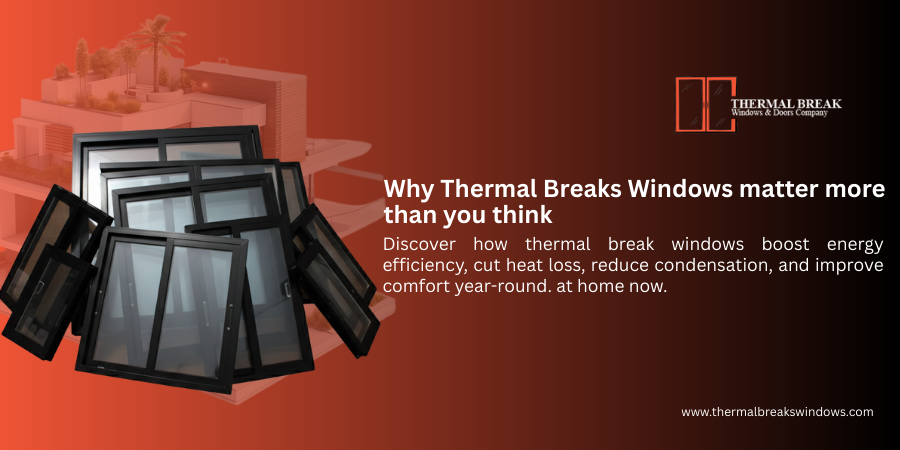
Most individuals consider the glass when purchasing windows, either as to double glazing, low-E coating, or argon gas fills. However, there is an important aspect that is frequently overlooked which contributes significantly to comfort and energy saving and that is the thermal break. Thermal break windows do not get anyone excited but covertly, make a world of difference when it comes to the comfort of your home, its performance and energy savings.
What Are Thermal Break Windows?
A thermal break is a non-conductive material usually a reinforced polymer placed between the interior and exterior parts of a window frame. This barrier interrupts the path that heat or cold would normally travel through conductive materials like aluminum.
Without a thermal break, the frame acts like a bridge, allowing outdoor temperatures to pass straight inside. With a thermal break, that transfer is significantly reduced.
Why Window Frames Matter More Than You Realize
Even the most advanced glass can’t perform at its best if the frame allows heat to escape or enter freely. Traditional metal frames are especially problematic because metal conducts temperature extremely well.
Thermal break technology solves this by:
-
Reducing heat loss in winter
-
Blocking heat gain in summer
-
Maintaining a more stable indoor temperature year-round
In short, it helps the entire window system work as intended.
Improved Energy Efficiency and Lower Bills
One of the biggest benefits of thermal break windows is improved energy efficiency. By minimizing heat transfer, your HVAC system doesn’t have to work as hard to maintain a comfortable indoor environment.
That translates into:
-
Lower heating and cooling costs
-
Reduced energy consumption
-
Better overall performance ratings for your home or building
Increased Comfort Inside Your Home
Ever noticed cold spots near windows in winter or excessive heat radiating in during summer? That’s often due to poor thermal insulation in the frame.
Thermal break windows help eliminate:
-
Drafty window areas
-
Cold interior frame surfaces
-
Temperature imbalance near walls and windows
The result is a noticeably more comfortable living or working space, no matter the season.
Condensation Control and Moisture Protection
When warm indoor air meets a cold window frame, condensation forms. This moisture can lead to mold growth, frame deterioration, and even water damage over time.
Thermal break frames stay warmer on the interior surface, significantly reducing condensation risk and helping protect both the window and surrounding building materials.